
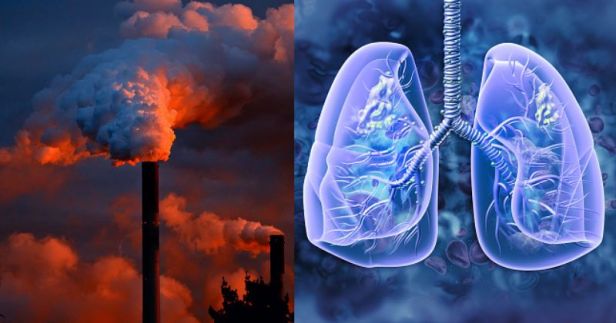
The death of Ella Adoo-Kissi-Debrah in 2013 was an eye-opener for authorities in the UK. Before her early demise, the young girl was in and out of hospitals and emergency rooms for various respiratory-related concerns. She died after a severe asthma attack.
Ella lived with her mother, Rosamund, along the South Circular Road area in south London. It is one of the most polluted places in the city and authorities and environmental campaigners believe this was what contributed to the young girl’s deteriorating health condition. In December 2020, after an inquest, the coroner officially proclaimed Ella’s cause of death as exposure to air pollution.
In September 2022, a group of scientists conducted a study that analysed the link between Ella’s death and air pollution. Their research is also intended to gather information that would help the public understand why lung cancer can develop in people who do not smoke (and have never smoked).
Many consider the findings of the study as a warning that stricter policies are needed to reverse the devastating impacts of air pollution on a person’s health. The results of the study were presented at the European Society for Medical Oncology by Francis Crick Institute’s Professor Charles Swanton. The conference took place in Paris.
The professor shared that even if the risk of developing lung cancer through exposure to toxic air is lesser than that of cigarette smoking, it is still a dangerous impact because we cannot control or dictate what we breathe in. Smoking may be a major cause of lung cancer but it is air pollution that has high numbers in the UK – at least 1 in 10 cases.
Additionally, around 6,000 people who have not smoked or do not smoke succumb to lung cancer every year. The global total is 300,000.
Most cases of premature death are linked to exposure to fine particulate matter or PM2.5. The study did not discuss in detail how PM2.5 exactly leads to cancer. What Professor Swanton and his team revealed, however, is that the tiny particles of PM2.5 may lead to lung inflammation and cause cancer.
More specifically, the researchers believe that the lungs’ inactive cells are awakened since their cancer-causing mutations become active. This can lead to the growth of tumours.
The ideal way to stop the growth of these cells is to lessen lung cancer risks, especially air pollution.
Professor Swanton and his team studied a mutant lung cancer known as EGFR or epidermal growth factor receptor. This mutation is typically present in people who have never smoked or do not smoke.
The research team also observed mice that were exposed to excessive levels of urban air pollution had lungs with EGFR mutations.
Air pollution from diesel emissions
Diesel emissions from road transport are major pollutants for both humans and the environment. The most dangerous emission from diesel vehicles is NOx or nitrogen dioxide.
NOx is a group of gases released by vehicle fumes. It is highly reactive, so it produces pollutants such as ground-level ozone (which destroys vegetation) and smog and acid rain (which cause respiratory issues).
If a person is exposed to NOx emissions, it won’t take long before they experience its effects on their health. One of the most easily affected is their mental health, which will make them vulnerable to depression and anxiety.
In people exposed to NOx emissions, dementia, specifically Alzheimer’s disease, is caused by a decline in cognitive health.
Aside from cancer, exposure to NOx emissions can also lead to serious health conditions, such as Chronic Obstructive Pulmonary Disease (COPD), asthma, cardiovascular illnesses, and premature death.
Diesel vehicles have been emitting NOx for years but the emissions became word of mouth, almost a household name after the Dieselgate scandal erupted in 2015.
What is the Dieselgate scandal all about?
Since 2015, governments and environmental authorities and campaigners have been making sure that new vehicles are tested for emissions compliance before they are sold and driven. The Volkswagen Group was the first to receive a notice of violation for the alleged use of defeat devices in their Audi and Volkswagen diesel vehicles.
Defeat devices artificially lower emissions to within World Health Organization standards so that vehicles would pass regulatory emissions tests. The devices make the vehicles appear safe for selling and driving, but only during testing conditions.
Once the vehicles are out on real roads for real-world driving, they release illegal levels of NOx. Thus, vehicles with defeat devices are pollutants.
Authorities ordered the VW Group to recall the hundreds of thousands of affected diesel vehicles in the US. They had to pay fines as well. Not long after authorities apprehended Volkswagen, defeat devices were discovered in multiple Mercedes-Benz models.
Other carmakers that allegedly installed defeat devices include Renault, Vauxhall, Ford, and Nissan.
Filing my diesel claim
Authorities and law firms are urging affected car owners to file a diesel claim against their carmakers and hold them responsible for their illegal acts. It’s also one way of helping the campaign to reduce air pollution. If the claim is successful, drivers will be compensated.
First off, though, you need to verify if you are eligible to receive compensation. Visit Emissions.co.uk to get all the details you need. Work with an emissions expert once you’re ready to start your claim.
 Personal Health care blog